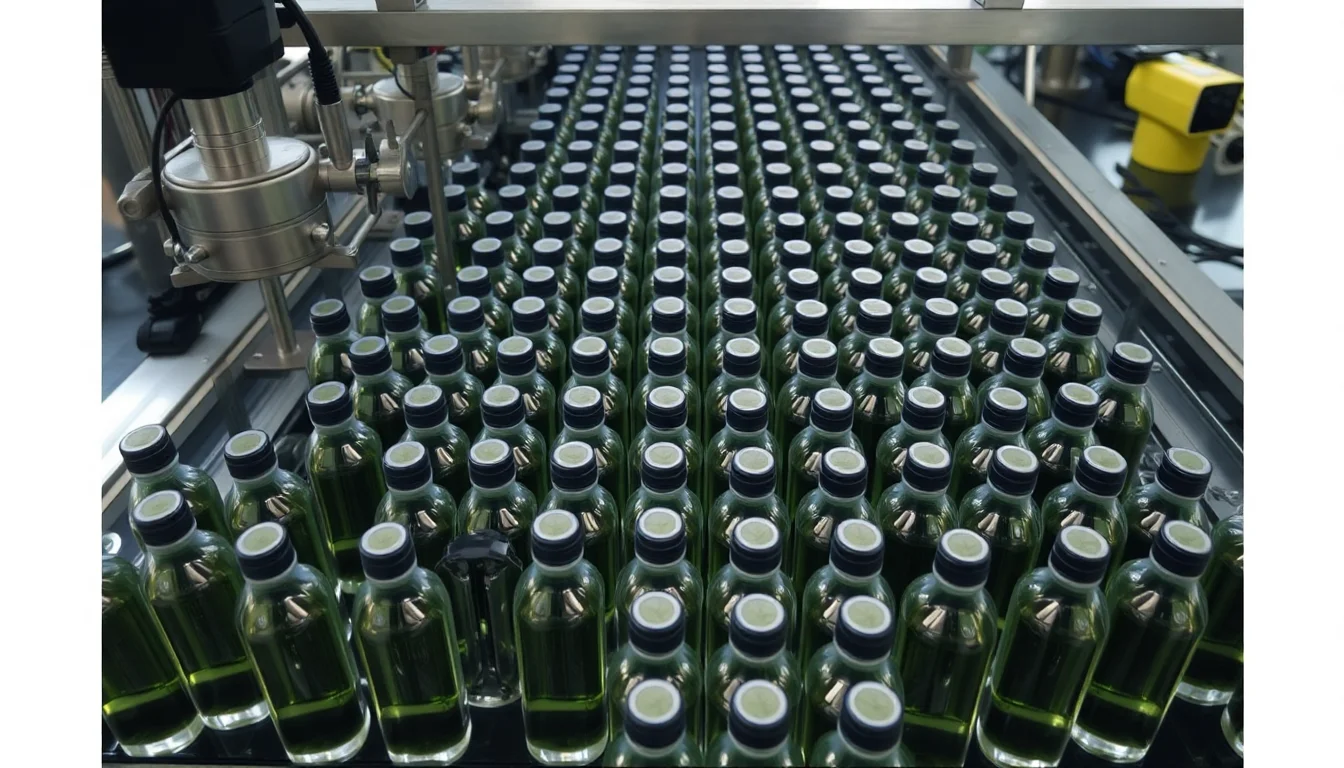
Industrial Chemical Liquid Filling

Chemical Liquid Filling Machine

Chemical liquid filling machine for acids, alkalis, solvents and specialty chemicals. tolerance by RFQ, 500โ€“2,000 containers/hr, 1Lโ€“1,000L. SUS316L / PTFE / HDPE wetted parts. ATEX Zone 1/2 & IECEx documentation reviewed.

by RFQ
Filling Accuracy
500โ€“2,000 containers/hr
Speed
1L โ€“ 1,000L
Container Range
SUS316L / PTFE / HDPE
Wetted Parts

Technical Specifications

Quotation Basis: Configured by RFQ
Filling Accuracyby RFQ
Speed500โ€“2,000 containers/hr
Container Range1L โ€“ 1,000L
Wetted PartsSUS316L / PTFE / HDPE
ATEX OptionZone 1 / Zone 2 available
DocumentationScope review

Key Features

โš—๏ธ

Chemical-Compatible Wetted Parts

Wetted part material selection is critical for chemical liquid filling. Our standard configuration uses SUS316L stainless steel with PTFE seals, covering most industrial chemicals including inorganic acids (after application review concentration), organic solvents, and specialty chemical intermediates. For highly corrosive products (concentrated acids, aggressive alkalis, reactive oxidants), HDPE-lined pipework and PTFE-coated fill heads are available. Material compatibility charts provided before order confirmation.

๐Ÿ›ก๏ธ

Full ATEX Zone 1 / Zone 2 Documentation

Chemical liquid filling operations frequently involve flammable solvents, reactive intermediates and products with low flash points. Our hazardous-area documentation review chemical liquid filling machines are reviewed against ATEX Directive 2014/34/EU Group II, Category 2G (Zone 1) and 3G (Zone 2). Includes explosion-proof motor, intrinsically safe sensors and indicators, anti-static fill head, bonding and grounding connections, and flame-arrester vents. IECEx documentation available for export to non-EU markets (Middle East, Southeast Asia, Australia).

๐Ÿ“

Wide Container Range: 1L Bottles to 1,000L IBC

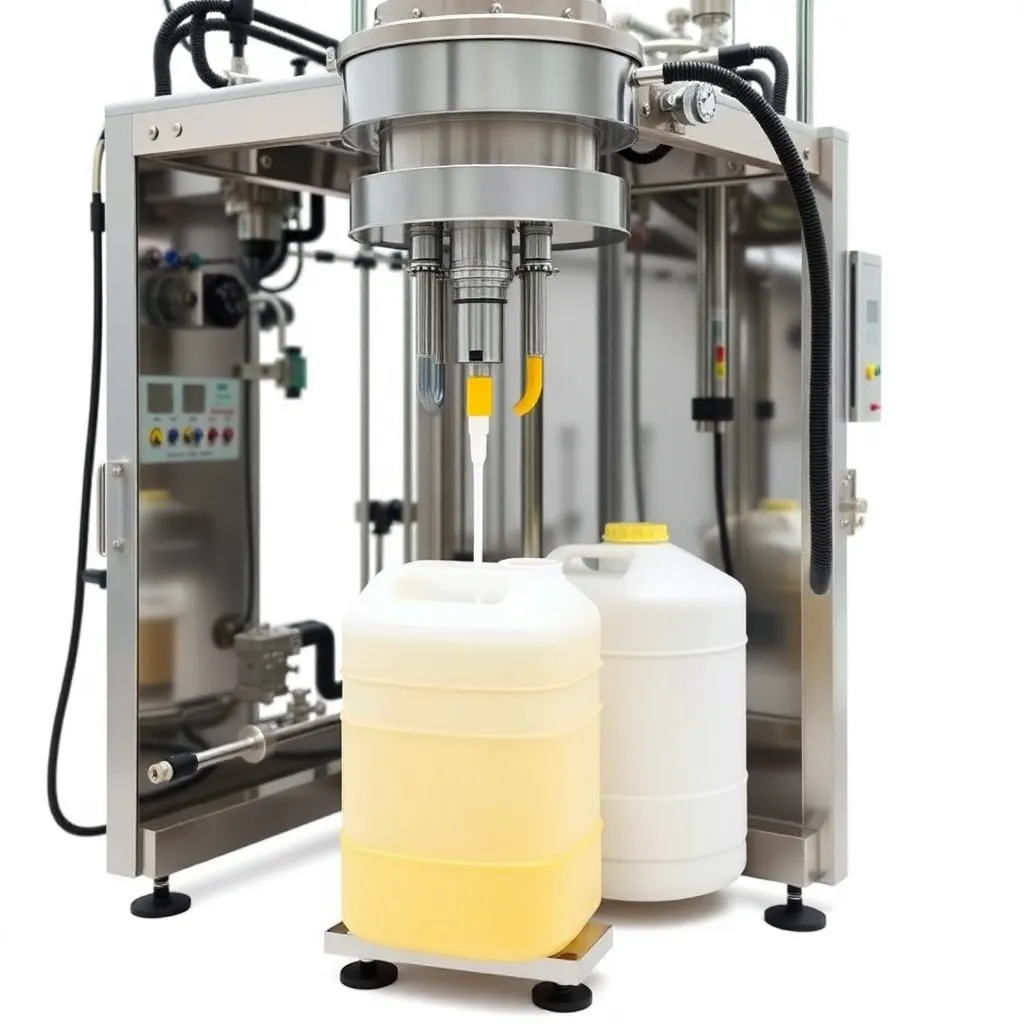
A single chemical liquid filling machine handles the full range from 1L chemical bottles to 1,000L IBC totes by changing fill head configuration and weigh platform. Bottle filling uses piston or peristaltic pump with bottom-up filling nozzle for foamy products. Drum filling (50โ€“200L) uses net-weight load cell control. IBC filling (500โ€“1,000L) uses a high-flow fill head with closed-loop bottom connection for volatile chemicals. All configurations available in a single machine or as a dedicated single-format line.

Frequently Asked Questions

What chemicals can your chemical liquid filling machine handle?โ–ผ

Our chemical liquid filling machines handle a broad range of industrial liquids: acids (hydrochloric acid after application review, sulfuric acid after application review, phosphoric acid, acetic acid), alkalis (caustic soda solution, ammonia solution, potassium hydroxide), organic solvents (acetone, ethanol, isopropanol, toluene, xylene), specialty chemical intermediates, cleaning agents and disinfectants, agricultural chemicals and pesticide formulations, and industrial coatings and adhesives. Wetted part material selection (SUS316L, HDPE, PTFE, Hastelloy) depends on the specific chemical product. We require a complete chemical specification sheet including concentration, temperature, density and viscosity to confirm material compatibility.

How does net-weight filling work for chemical liquids?โ–ผ

Net-weight filling measures the actual mass of liquid dispensed into each container, independent of container tare weight variation or liquid density changes. The container sits on a load cell platform. The system records container tare weight, opens the fill valve (fast-fill to ~a reviewed portion of target weight), then switches to slow top-off mode approaching the target, and closes the valve at target target net weight. Accuracy of by RFQ is achieved across the 1Lโ€“1,000L range. This method handles density variations between product batches without recalibration โ€” important for chemical liquids where concentration variations affect density.

What is the difference between chemical liquid filling machines and standard filling machines?โ–ผ

Chemical liquid filling machines differ from standard filling machines in: (1) wetted part materials โ€” chemical-grade SUS316L, PTFE, HDPE instead of standard stainless steel; (2) corrosion protection on all surfaces exposed to chemical vapors; (3) hazardous-area documentation reviewed by project electrical systems for flammable chemicals; (4) closed-loop filling connections to prevent vapor release (particularly for volatile organics and concentrated acids); (5) secondary containment and drip trays for corrosive products; (6) emergency stop and automatic valve-close systems; (7) anti-syphon valves to prevent post-fill drip of aggressive chemicals.

What chemical liquid filling machine configurations can be reviewed?โ–ผ

RFQ scope can review bottle fillers (1Lโ€“20L), drum fillers (50โ€“200L) and IBC/tote fillers (500โ€“1,000L), with filling method, wetted materials, hazardous-area documentation and integration scope confirmed from the chemical product, SDS, container format and site conditions.
Get a Free Chemical Filling Assessment

Tell us your chemical product, container format, required throughput, flash point and any ATEX requirements. Our engineers will respond after scope review with a material compatibility report.

Scan to add HEMUfill on WeChat

ๆ‰ซ็ ๆทปๅŠ ๅพฎไฟก
WeChat Contact