1
IBC standard
500L or 1000L IBC, composite or stainless tote, top opening size, valve type and pallet dimensions.
IBC Tote & Bulk Container Filling
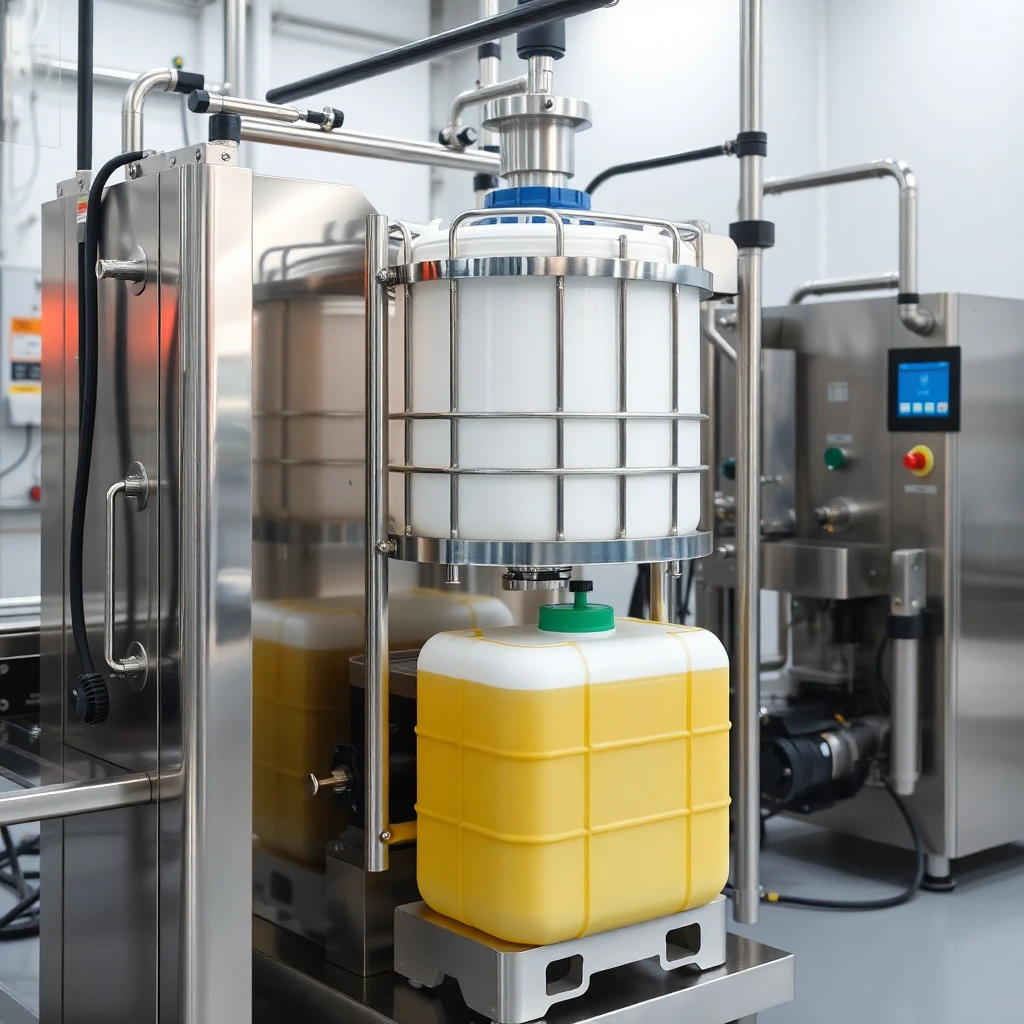
IBC filling machine for 500L–1,000L containers with top-fill and bottom-fill configurations reviewed by RFQ. Tolerance, throughput and ATEX documentation scope depend on product and site conditions.
RFQ preparation
IBC filling projects often change cost because of top-fill versus bottom-fill, vapor control, pallet handling and batch traceability. Send these details before asking for a final price.
Send Project Details500L or 1000L IBC, composite or stainless tote, top opening size, valve type and pallet dimensions.
Top-fill, bottom-fill or both; confirm whether vapor release, foaming, operator exposure or closed-loop transfer matters.
SDS, flash point, corrosiveness, required contact material, grounding and hazardous-area classification.
Forklift or conveyor loading, weighing records, batch code, target IBCs per hour and whether capping or labeling is included.
Top-fill: fill nozzle inserted through the IBC top opening — suitable for non-volatile, non-hazardous liquids. Bottom-fill: sealed connection via the IBC butterfly valve for closed-loop filling with zero vapor release — required for volatile solvents, flammable chemicals and any product where operator exposure must be minimized. Both configurations available, or combined on one machine with quick switchover.
Bottom-fill closed-loop system creates a sealed product pathway from tank to IBC with no open liquid surface. For solvents, alcohols and flammable chemicals, this eliminates the primary ignition risk (flammable vapor accumulation) and the health risk (operator inhalation). Combined with hazardous-area documentation reviewed by project motors, sensors and control panels for Zone 1/2 hazardous area compliance.
Integrated PLC records fill weight, date/time, operator ID, batch number and product code for every IBC filled. Data exported to CSV or ERP system via Modbus/OPC-UA. Supports GHS/REACH batch record requirements for chemical manufacturers and satisfies customer audit requirements in pharmaceutical, food-grade and specialty chemical sectors.
Top-fill: the fill nozzle is lowered through the 150mm top opening and product fills from the top down. Simple and flexible for most non-volatile chemicals, adhesives, resins and food-grade liquids. Bottom-fill: a dry-break coupler connects to the IBC butterfly valve (DN50 or DN80) and product fills from the bottom up inside a fully sealed loop — no open liquid surface, no vapor release. Bottom-fill is required for volatile solvents (flash point <60°C), aromatic compounds, and any product where operator exposure limits (OEL) require closed systems.
Our IBC filling machines support all standard IBC tote formats: UN31HA1 (composite IBC with HDPE inner vessel in steel cage, 1,000L — the dominant global standard), UN31HB1 (HDPE IBC, 1,000L), 500L intermediate IBC formats, and stainless steel IBCs (types IBC 31A, 31B). Cage dimensions for 1,000L IBCs are standardized at 1,200mm × 1,000mm × 1,160mm. Fill heads and drip trays are sized accordingly.
Fill time for a 1,000L IBC depends on liquid viscosity and pump/gravity flow rate: low-viscosity chemicals and solvents (1–100 cps): 3–5 minutes; medium-viscosity liquids (100–1,000 cps): 5–8 minutes; high-viscosity adhesives and resins (1,000–10,000 cps): 8–15 minutes. At 5 minutes per fill, a single-head IBC filling station produces 12 IBCs/hour (12,000 liters/hour). Most chemical producers require 15–40 IBCs/hour, achievable with 2–4 filling heads on a single conveyor.
Yes. The IBC filling machine PLC supports standard industrial communication protocols: Modbus TCP/IP for ERP/MES integration, OPC-UA for SCADA systems, and digital I/O for older PLC integration. Each fill event records: fill weight, target weight, variance, date/time, operator ID, batch code and product recipe. Data is stored locally (minimum 10,000 fill records) and can be exported to external systems via network or USB. For pharmaceutical or food-grade applications, 21 CFR Part 11 audit trail options are available.
Solution References
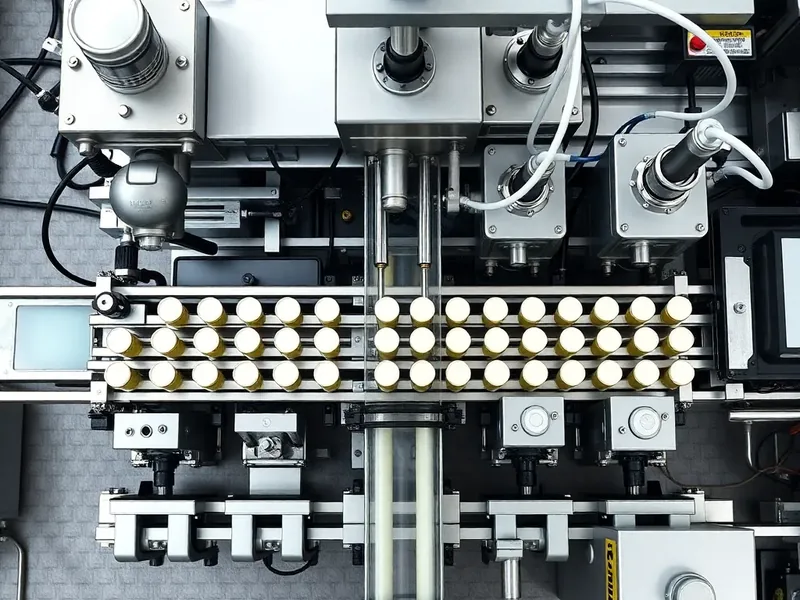
Coatings · Turkey application reference
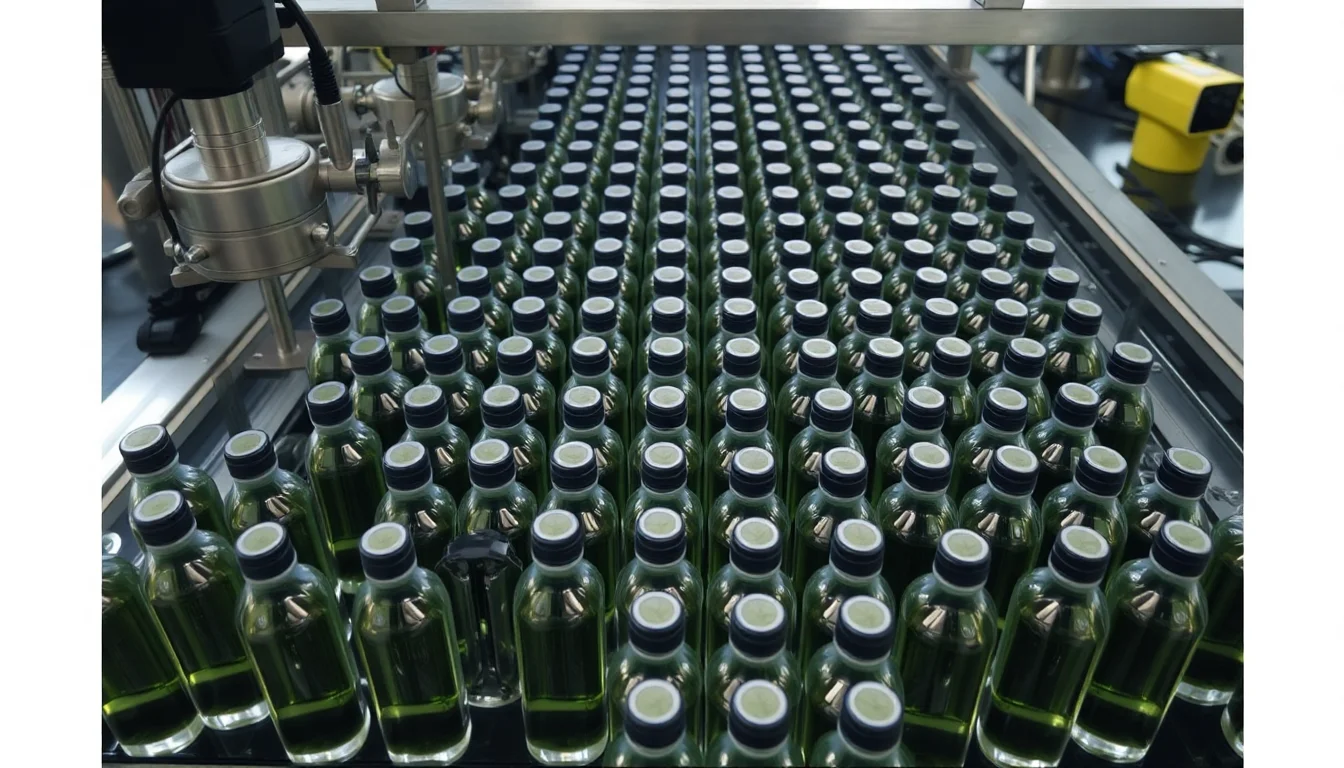
Lubricants · USA application reference
Tell us your product (chemical/solvent), IBC size, required throughput and ATEX classification. Our engineers will design the optimal IBC filling system after scope review.

扫码添加微信
WeChat Contact