Cosmetic & Personal Care Production
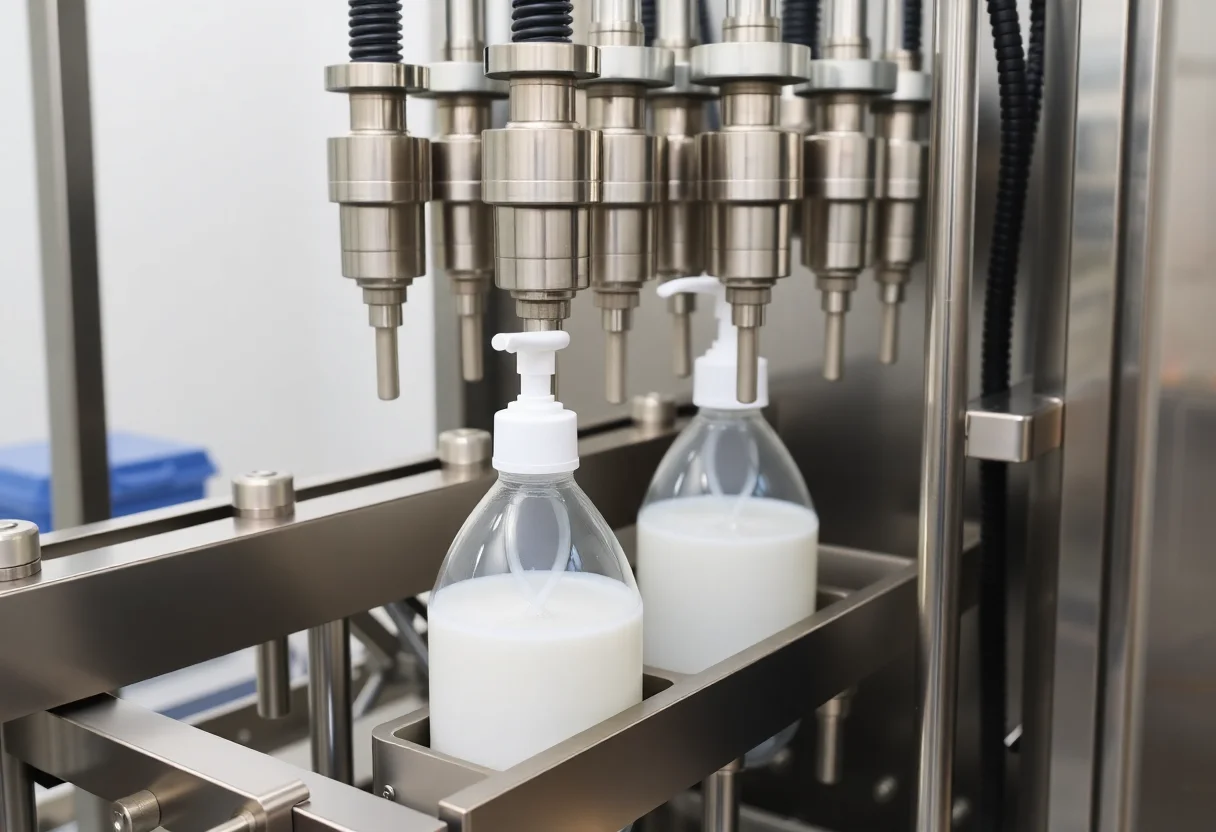
Liquid Soap Filling Machine
CIP-ready liquid soap filling machine for liquid soap, hand wash and body soap. 2,000–6,000 bottles/hr. by RFQ. Anti-siphon foam control. Automated 3-stage CIP. CE, ISO and GMP documentation reviewed by project scope.
Key Features
Foam-Controlled Anti-Siphon Valve Design
Liquid soap and hand wash products produce persistent foam during filling that contaminates bottle necks, clogs label areas and causes significant fill weight inaccuracy. Our liquid soap filling machines use anti-siphon nozzles with a vacuum suckback mechanism — at the end of each fill cycle, a precision vacuum draws any residual liquid and foam back into the nozzle before the container moves forward. This eliminates neck contamination, maintains fill weight accuracy to by RFQ, and prevents cross-contamination between fills. The anti-siphon design also prevents product draining between fill cycles when the line stops unexpectedly.
Automated 3-Stage CIP for Fragrance Integrity
Liquid soap products frequently contain fragrances, essential oils and colorants that can contaminate subsequent batches if not thoroughly removed. Our automated 3-stage CIP system executes: Stage 1 — hot water pre-rinse (60°C, 5 minutes) to remove bulk product residues; Stage 2 — detergent wash (food-grade alkaline cleaner, 65°C, 10 minutes) to remove surfactant films, fragrance residues and colorant traces; Stage 3 — final rinse with potable water followed by approved sanitizer. The complete cycle takes 20–30 minutes and is fully documented for GMP batch records. Conductivity monitoring at the outlet confirms full product removal before sanitizer contact.
Wide Container Compatibility: Pump Bottles to Refill Pouches
Liquid soap is sold in an increasingly diverse range of container formats: pump dispensers (250ml–1L), squeeze bottles (100ml–500ml), flip-cap bottles (100ml–2L), and bulk refill pouches (1L–5L). Our liquid soap filling machines use servo-controlled fill head positioning and interchangeable nozzle types (dive nozzles for narrow-mouth containers, wide-bore nozzles for pouches) to handle all formats on one line. Switching between container types uses stored recipes and requires 10–15 minutes for guide width and nozzle changeover. Pouch filling requires an optional pouch handling module.
Technical Specifications
Frequently Asked Questions
1What is the difference between liquid soap and shampoo filling machines?
Liquid soap and shampoo filling machines share similar anti-foam design principles but differ in key areas. Liquid soap products typically have higher viscosity (500–30,000 cP vs shampoo's 100–8,000 cP) due to higher salt content thickening. Liquid soaps also contain higher concentrations of anionic surfactants that create more persistent foam requiring stronger vacuum suckback. Pump and nozzle materials for liquid soap must resist alkaline pH (pH 9–11 for soap vs pH 5–7 for shampoo) — we use PVDF or PP wetted parts for liquid soap lines rather than 316L stainless steel which can corrode at high pH with chloride-containing formulations. Both machine types support CIP and GMP compliance.
2Can the machine handle both liquid soap and antibacterial hand wash?
Yes. Our liquid soap filling machines handle both regular liquid soaps and antibacterial hand wash products containing triclosan, benzalkonium chloride or alcohol-based antibacterial agents. For alcohol-based antibacterial hand washes (isopropanol or ethanol content above the reviewed threshold), ATEX documentation review rated components are required — specify this when ordering. The antibacterial agent concentration does not affect filling machine operation. CIP protocols should be verified to confirm compatibility with antibacterial agent residues in the cleaning solution.
3What accuracy does the liquid soap filling machine achieve?
Our liquid soap filling machines achieve tolerance by RFQ using load-cell based weighing under each container during the fill cycle. On a 500ml bottle (typical density 1.02–1.05 kg/L, so approximately 510–525g), by RFQ means by RFQ. This accuracy is maintained across the full viscosity range (500–30,000 cP) because net-weight filling compensates for density and viscosity variations between batches. Volumetric filling (piston or flow meter) achieves similar accuracy for consistent-density products but requires recalibration when batch density changes.
4How are pump dispenser bottles handled on the liquid soap filling line?
Pump dispenser bottles (lotion pumps) require the pump mechanism to be inserted and crimped after filling. Our liquid soap filling lines support pump bottle formats by integrating a pump insertion and crimping station downstream from the fill station. The fill station uses a dive nozzle that fills through the open bottle neck before the pump is inserted. Timing of pump insertion is critical — the filling line should complete filling and move containers to the capping station before any significant foaming can accumulate above the fill level. For high-foam formulations in pump bottles, a brief settling pause (2–3 seconds) between fill completion and pump insertion is programmed into the machine recipe.
Related Machines
Solution References
Solution References
Cosmetic filling solution references for this product.
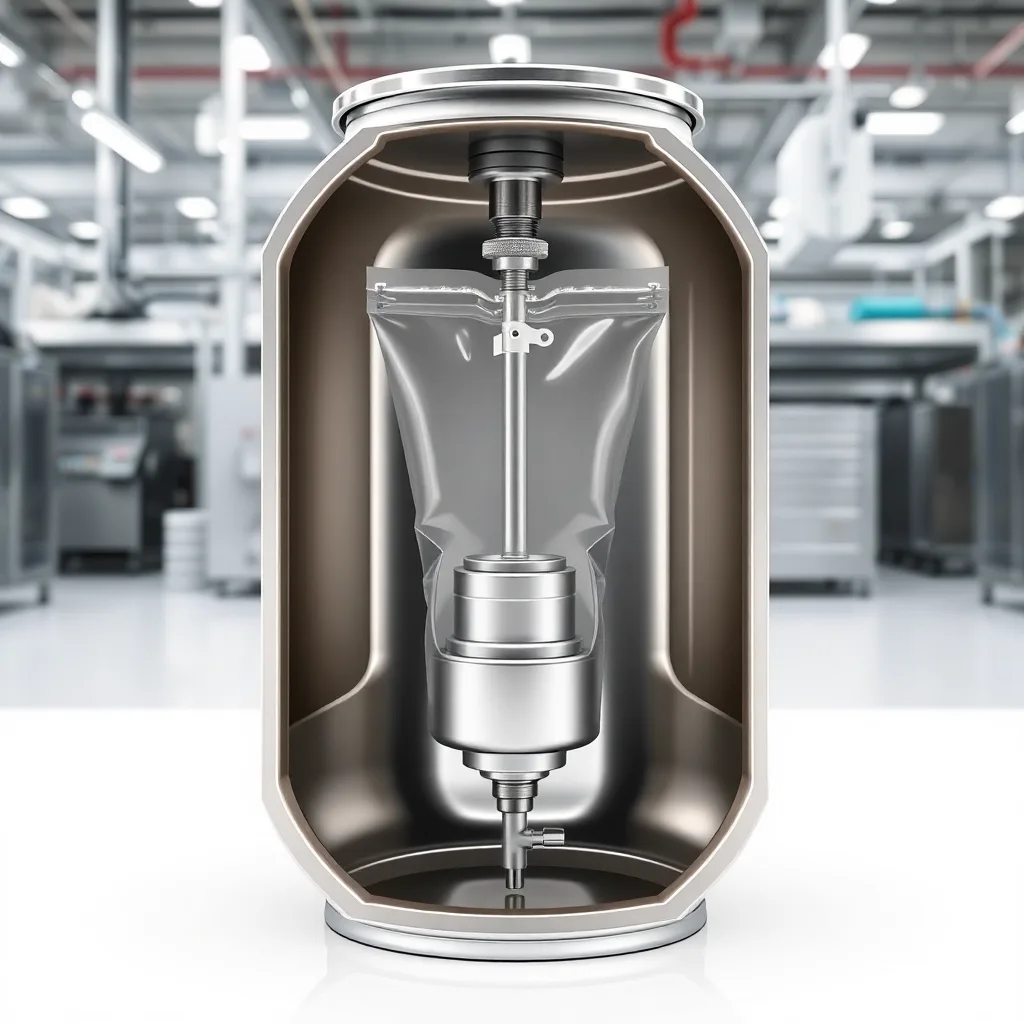
India application reference
Filling machine solution reference
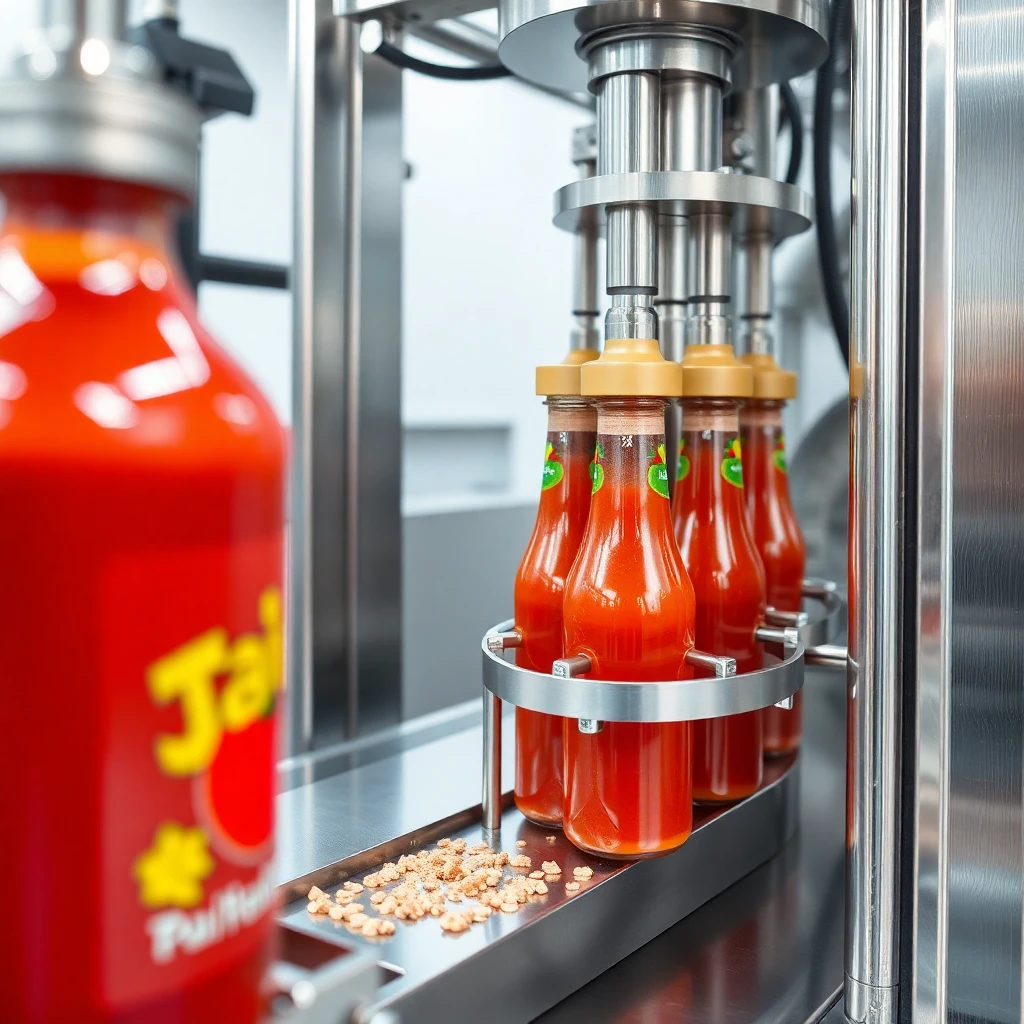
USA application reference
Filling machine solution reference
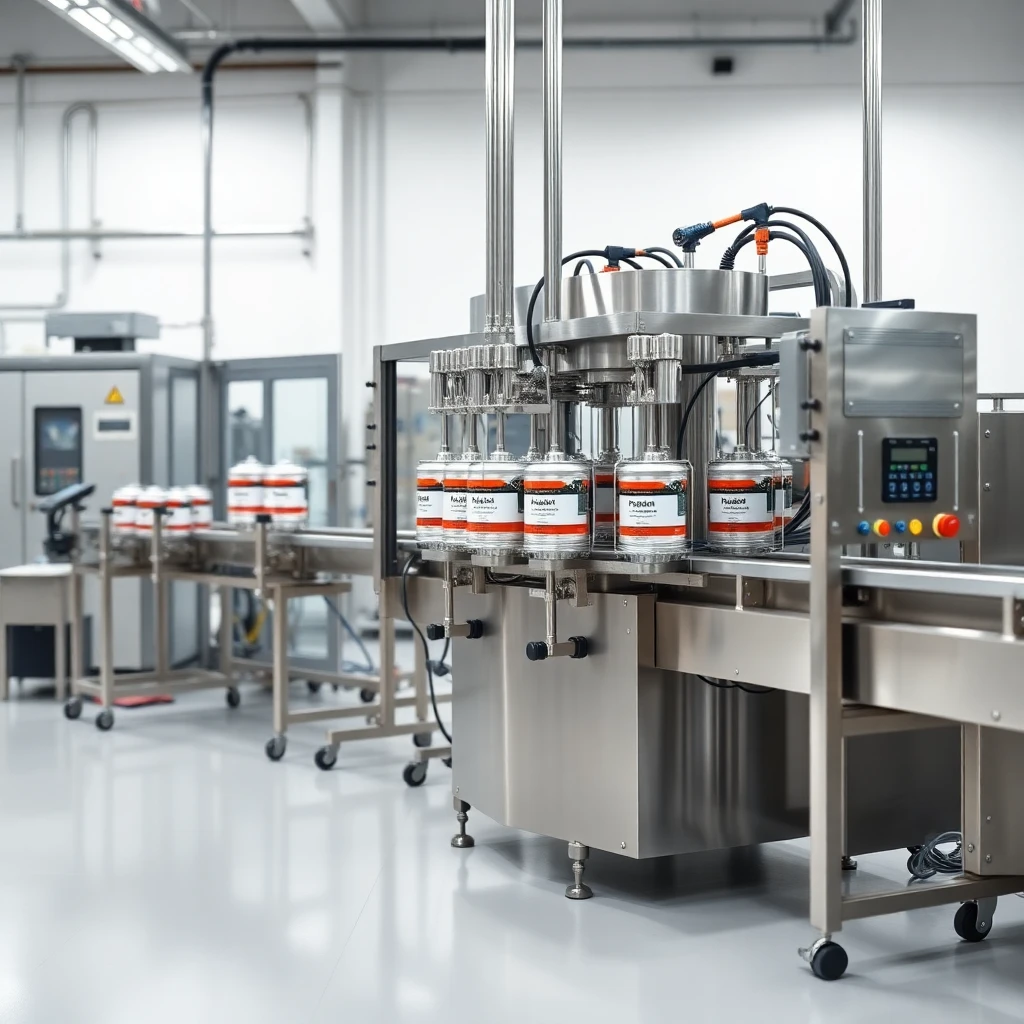
Germany application reference
Filling machine solution reference
Get a Free Line Assessment
Tell us your liquid soap viscosity, bottle format and production target. We'll design the optimal filling system after scope review.
Request Free Assessment