Application Fit Examples

Solution references for RFQ scoping

Food & PharmaSolution reference

liquid filler machine

Typical co-packing scenario

A co-packing line may need one liquid filler machine to cover water-thin tinctures, syrups and small-batch recipe changes without cross-contamination.

A peristaltic or modular pump filling configuration can be reviewed when product-contact control, fast tubing changeover and moderate output are more important than a fixed high-speed line.

1-30,000cP
Viscosity
1,200/hr
Output
No-contact pump
Clean
CosmeticsSolution reference

viscous liquid filling machine

Typical cosmetics scenario

A lotion or cream project may need to fill 100ml jars with medium-to-high viscosity product while avoiding stringing, pulling and label contamination.

A piston-type viscous liquid filling configuration with bottom-up nozzles, anti-drip cutoff and product testing is the usual review path before quotation.

Up to 20,000cP
Viscosity
600/hr
Output
Anti-drip nozzle
Drip
Food ProcessingSolution reference

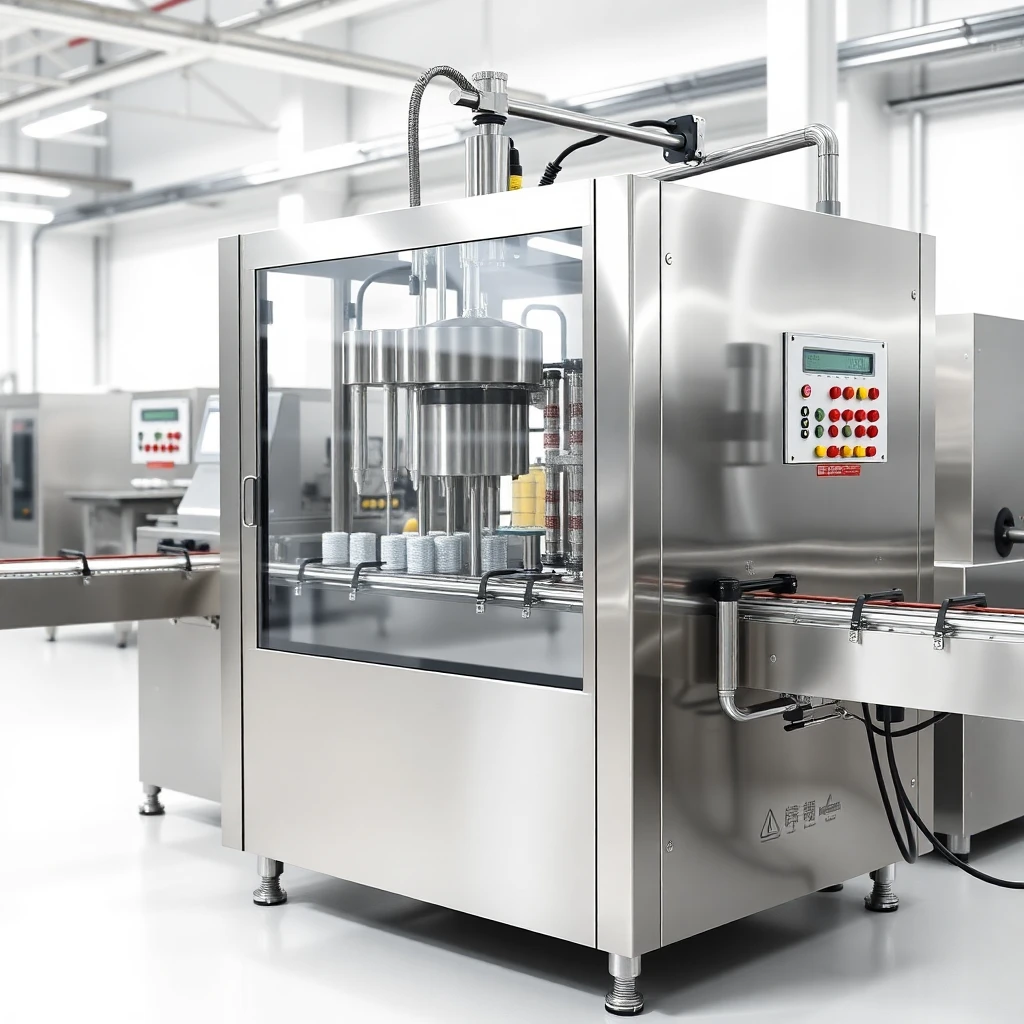
automatic liquid filling machine

Typical food processing scenario

A food plant may need one automatic liquid filling machine for water-like liquids, syrup and oil while keeping recipe changeover and cleaning practical.

A multi-product liquid filling line can use dedicated fill heads or a validated flush/CIP path depending on allergen, flavor carryover and sanitation requirements.
3 types
Products
In-place
CIP
2,400/hr
Output
Liquid Filling Machine — HEMUfill

Enchedora de líquidos · 2.400/mês · $2.10

Enchedora de líquidos

Enchedora de líquidos: ±0.3%, 2–16 cabeças. CE.

Solicitar avaliaçãoA partir de $8.000 USD
Custom
Application Review
24h
Engineer Response
±0.3%
Fill Accuracy
0.5cP–1M cP
Viscosity Range

Vantagens

🔄

One Platform, Five Fill Principles

Gravity, piston, peristaltic pump, gear pump and electromagnetic flow meter — all available on the HEMUfill modular frame. Switch fill technology by changing the head module, not the machine. Cover water-thin liquids at 36,000 BPH and viscous paste at 10 fills/min on a single investment.

🎯

PLC + HMI Recipe Management

Store up to 200 product recipes: fill volume, fill speed, head count, nozzle depth, anti-drip timing. Operators recall any product in under 2 minutes. Servo-driven fill with encoder feedback delivers ±0.3% volumetric accuracy, automatically correcting each head independently in real time.

⚙️

2–16 Heads, Inline or Rotary

Scale output from 500 BPH (2-head inline) to 60,000 BPH (rotary). Modular head pairs upgrade without replacing the base frame — add capacity as your business grows. Same operator interface, same recipe system, same spare parts across all head counts.

Especificações

fill range1 ml – 30,000 ml
fill principlesGravity · Piston · Peristaltic · Gear pump · Flow meter
viscosity0.5 cP (water) to 1,000,000 cP (heated paste)
accuracy±0.3% (servo piston / flow meter); ±0.5%–±1% (gear pump)
speed10 – 200 fills/min (product and head count dependent)
heads1 · 2 · 4 · 6 · 8 · 10 · 12 · 16 (inline); up to 60 (rotary)
containerBottle · Jar · Pouch · Can · Drum · Tray · Bag-in-box
materialSUS316L product-contact; SUS304 frame; FDA-approved seals
controlPLC + 7" colour HMI; 200 product recipes; Modbus/OPC-UA ready
changeoverRecipe recall < 2 min; full format changeover 20–45 min
cipCIP circuit available on all food and pharma models
certificationCE · ISO 9001:2015 · GMP option · FDA 21 CFR option

RFQ preparation

Liquid Filling Quote Scope Inputs

Liquid filling machine price depends on fill principle, container handling and line boundary. Use these inputs to avoid comparing a standalone filler with a complete fill-cap-label line.

Send Project Details
1

Liquid details

Product name, viscosity, density, temperature, particles, foaming, corrosiveness and cleaning requirement.

2

Container and closure

Bottle, jar, pouch, pail or drum; fill volume range, cap type, sample photos and labeling requirement.

3

Dosing method

If known, state piston, flow meter, peristaltic, gear pump or net-weight preference; otherwise share the product data for review.

4

Quotation boundary

Clarify whether the quote covers filling only, filling plus conveyor, or full line with capping, labeling, coding and commissioning.

Aplicações

Water & Beverage Bottling
Sauce & Condiment Filling
Cosmetic & Personal Care
Pharmaceutical Oral Liquids
Chemical & Detergent Filling
Edible Oil Bottling
Honey & Viscous Products
Agricultural Chemicals

FAQ

What is a liquid filling machine and how does it work?
A liquid filling machine is a production equipment that automatically dispenses a measured volume or weight of liquid product into a container — bottle, jar, pouch, can or drum. The machine uses one of five fill principles based on the liquid type: gravity (thin, free-flowing liquids), piston (universal, medium to high viscosity), peristaltic pump (pharmaceutical and aggressive chemicals), gear pump (viscous oils and syrups), or electromagnetic flow meter (high-speed water and thin liquids). A PLC with HMI controls fill parameters and stores up to 200 product recipes. Output ranges from 500 BPH on a small 2-head inline to 60,000 BPH on a 60-head rotary.
Which fill principle should I choose for my liquid?
Gravity: water, juice, wine, thin spirits (<100 cP) — simple, low cost, high speed. Piston: universal, 1 cP to 1,000,000 cP — most common for multi-product food, cosmetic and chemical lines. Peristaltic: pharmaceutical oral liquids, corrosive chemicals — no product contact with the pump mechanism; easy sterilization. Gear pump: oils, syrups, adhesives (1,000–500,000 cP) — high accuracy at constant temperature. Flow meter: water, thin beverages (1–100 cP) — ±0.2% accuracy, high speed, no mechanical displacement. Choose the principle that matches your viscosity and regulatory requirements.
What is the standard fill accuracy of a liquid filling machine?
Standard servo piston: ±0.3%–±0.5% volumetric at consistent temperature. Electromagnetic flow meter: ±0.2%–±0.3% — highest accuracy for thin liquids. Gear pump: ±0.3%–±0.5% — best for oils and syrups at controlled temperature. Net-weight filling (load cell): ±0.1%–±0.2% by weight — for declared-volume products and pharmaceutical fill weights. All HEMUfill liquid filling machines include SPC (Statistical Process Control) monitoring that tracks each head individually and auto-corrects throughout the shift.
When is a volumetric piston filling machine the right choice?
A volumetric piston filling machine is a good fit when the liquid has stable density and the project needs repeatable fills for oils, sauces, syrups, lotions or industrial liquids. It is often the most flexible first comparison point for small-to-medium output lines. For declared net-content products, high-value oils or liquids with density drift, compare piston filling with net-weight or flow-meter filling before final quotation.
How do I select the right number of fill heads?
Step 1: Calculate required bottles-per-hour (BPH) = daily units ÷ production hours. Step 2: Apply OEE factor (typically 0.75–0.85): Adjusted BPH = Required BPH ÷ OEE. Step 3: Match head count: 2-head inline = ~1,200 BPH; 4-head = ~2,400 BPH; 8-head = ~4,800 BPH; 12-head = ~7,200 BPH. Step 4: Add growth buffer — size for 120%–150% of today's volume. Example: 50,000 units/day, 8-hr shift = 6,250 BPH needed. At 0.80 OEE: 7,812 adjusted → 12-head inline or small rotary.
What containers can a liquid filling machine handle?
Inline piston or pump fillers handle virtually any container: rigid (PET, HDPE, PP, glass, aluminium), semi-rigid (HDPE containers, bags-in-boxes) and flexible (pouches, sachets, tubes). Round bottles are easiest — no orientation needed. Non-round shapes need a timing screw or orientation unit. Deep containers (drums, pails) need a dive nozzle (bottom-up fill). The HEMUfill system includes guide rail, conveyor speed, nozzle height and dive depth adjustments, all stored as recipe parameters.
How should I compare liquid filling machine price quotes?
Compare quote scope before comparing price. A standalone filler, a filler with conveyor, a fill-cap-label line and a turnkey packaging line are different purchases. A useful RFQ includes liquid type, viscosity, fill volume range, container and cap samples, target output, sanitation method, utilities, spare parts, commissioning boundary and destination requirements.

Avaliação gratuita

Líquido, embalagem e produção.

Scan to add HEMUfill on WeChat

扫码添加微信
WeChat Contact