Food & Beverage Production
Sauce Filling Machine
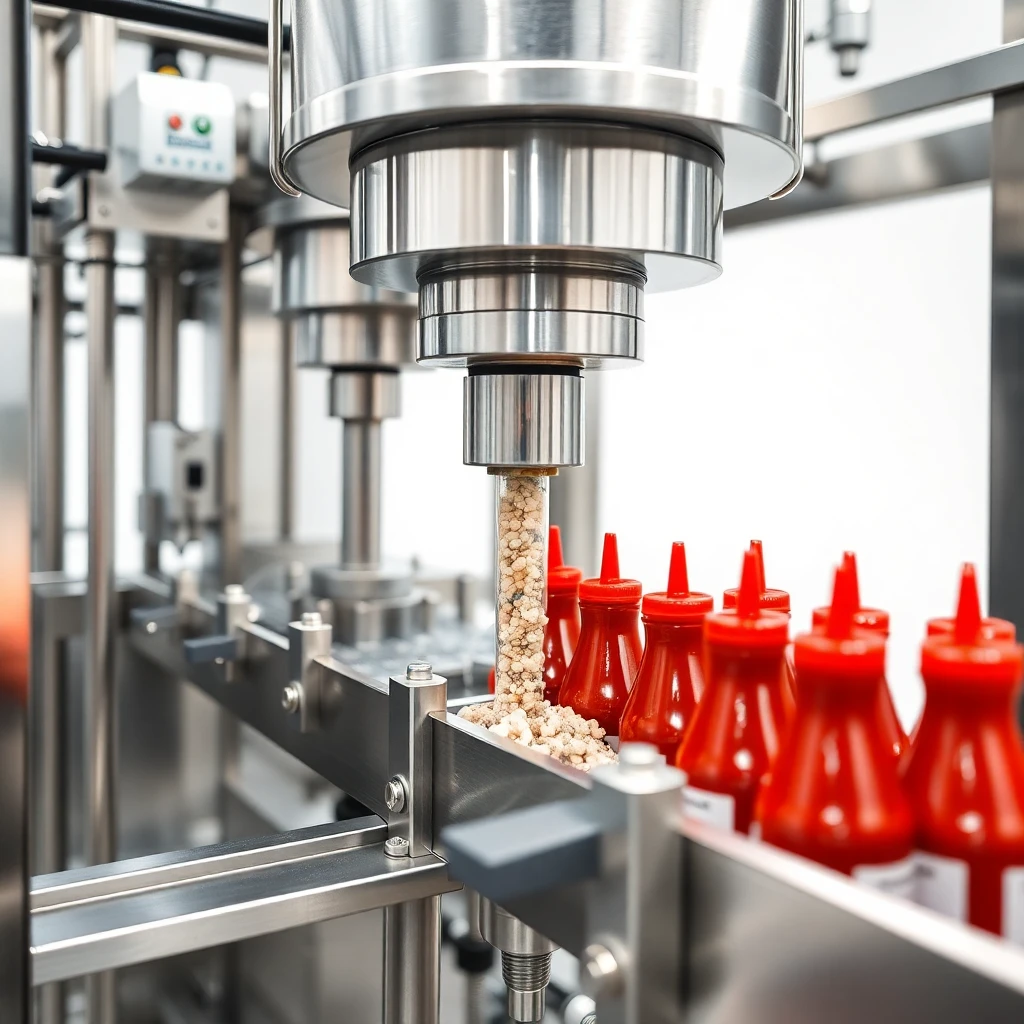
Sauce filling machine for ketchup, soy sauce, chilli sauce, hot sauce and condiments with particulates up to 15mm. 1,500–6,000 bottles/hr. Volumetric or net-weight filling. Hot-fill capable to 95°C. Food-contact configuration reviewed by project scope.
Key Features
Particulate-Tolerant Valve Design
Sauces with visible particulates — chilli flakes, diced vegetables, pepper pieces or seeds — need valve and nozzle review before quotation. Rotary valve and wide-bore piston filling heads can be specified for chunky products up to 15mm after product testing. The final valve material, seal set and anti-drip design should match acidity, abrasion and cleaning requirements.
Hot-Fill and Heated Path Review
Hot sauce and condiment projects may need heated hoppers, insulated product pathways and temperature-rated valves when the reviewed process requires hot fill or the sauce thickens as it cools. Shelf life depends on recipe, pH, thermal process and packaging validation; the filling machine should be specified to maintain the required filling temperature window.
Multi-Product Flexible Line
Sauce facilities often run multiple SKUs with different bottle sizes, viscosities and fill temperatures. A flexible line can use recipe-based fill settings, adjustable guides and a defined cleaning path so changeover time, product carryover and sanitation can be reviewed during RFQ scoping.
Technical Specifications
Frequently Asked Questions
What types of sauces can this filling machine handle?▼
Our sauce filling machines handle the full range of condiment and sauce viscosities: thin liquid sauces (soy sauce, fish sauce, Worcestershire sauce — 1–10 cP), medium viscosity sauces (ketchup, BBQ sauce, teriyaki — 500–5,000 cP), thick sauces (mayonnaise, tahini, pesto — 10,000–50,000 cP), and chunky sauces with particulates (salsa, relish, pasta sauce — up to 15mm pieces). Different viscosity ranges require different fill head configurations; specify your products when requesting a quote and we'll recommend the right valve type.
What bottle materials and formats does the machine support?▼
Our sauce filling machines support glass bottles (50ml–2L), PET bottles (100ml–5L), HDPE bottles (100ml–5L), and pouch packaging (with optional pouch filling module). Bottle mouth dimensions from 28mm to 82mm are handled by standard tooling; custom tooling for specialty bottle shapes is available. For glass and PET bottles with the same mouth diameter, switching requires only conveyor guide width adjustment — typically 10–15 minutes.
How do I prevent sauce from dripping or stringing between fills?▼
Sauce dripping and stringing are the most common quality issues in sauce filling, creating label contamination, weight inaccuracy, and hygiene problems. Our sauce filling machines use pneumatic anti-drip nozzles with bottom-up filling capability — the nozzle descends to near the container bottom and retracts as the fill level rises, minimizing splash and foam. For stringy sauces (tomato ketchup, mustard), we add a positive snap-back spring mechanism in the valve that creates a clean break on valve closure. For highly viscous products, a vacuum suckback system draws residual product back into the nozzle at the end of each fill cycle.
What is the difference between volumetric and net-weight filling for sauce products?▼
Volumetric filling measures a fixed volume per fill cycle using a calibrated piston or flow meter. It is fast (higher throughput) and well-suited for homogeneous liquid sauces with consistent density (soy sauce, vinegar-based sauces). Net-weight filling uses a load cell under each container to fill to a target weight regardless of density variation. Net-weight is preferred for products with variable density (sauces with sugar settling, products with density variation between batches) and for regulatory markets requiring declared weight-based net content labeling (EU, UK, Australia). Most of our sauce lines offer both modes selectable per product recipe.
Is a hot sauce filling machine different from a general liquid filler?▼
Yes. Hot sauce usually needs more review than a thin-liquid filler because viscosity, seeds, chilli flakes, pulp, hot-fill temperature and bottle-mouth size affect valve selection and anti-drip control. For chunky or fermented hot sauce, review wide-bore piston valves, bottom-up filling, hopper agitation and sanitation before quotation.
What RFQ information is needed before quoting a sauce filling machine?▼
Send sauce type, viscosity, maximum particulate size, fill temperature, fill volume range, bottle or jar samples, cap type, target output, cleaning method, utility conditions and whether the quote should cover a standalone filler or a complete filling line.
Application Fit Examples
Solution references for RFQ scoping
hot sauce filling machine
Typical hot sauce scenario
A buyer needed a configuration review based on product, container, output and documentation scope.
A reference configuration can be reviewed after RFQ details are submitted.
automatic sauce filling machine
Typical condiment scenario
A buyer needed a configuration review based on product, container, output and documentation scope.
A reference configuration can be reviewed after RFQ details are submitted.
small sauce filling machine
Typical startup scenario
A buyer needed a configuration review based on product, container, output and documentation scope.
A reference configuration can be reviewed after RFQ details are submitted.
Get a Free Line Assessment
Tell us your sauce type and viscosity, bottle format, required output, and hot-fill temperature requirements. We'll design the optimal sauce filling line after scope review.
Request Free Assessment