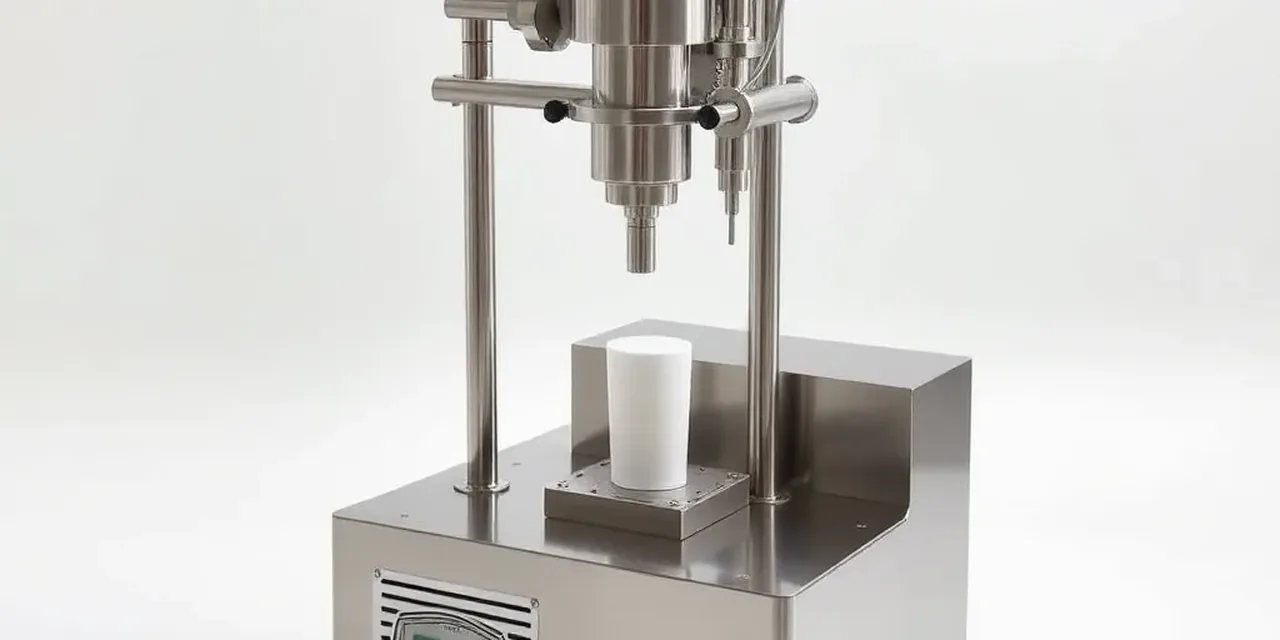
What is a semi automatic tube filling machine?▼
A semi automatic tube filling machine is a benchtop or floor-standing tube filler where the operator loads empty tubes by hand and triggers the fill-and-seal cycle manually (foot pedal or push-button), while the machine automatically performs the filling and tail-sealing steps. Compared to a fully automatic tube filling machine: fully automatic — tubes are loaded from a magazine, the machine runs continuously without an operator loading each tube. Semi-automatic — operator places each tube on the mandrel, triggers the cycle; the machine fills and seals; operator removes the finished tube. Speed: semi-automatic machines run at 10–30 tubes/min, limited by the operator loading pace. Fully automatic machines run at 20–120 tubes/min unattended. Investment is quoted by tube type, sealing method, output target and automation level. A semi-automatic tube filling machine is ideal for: production volumes of 5,000–50,000 tubes/day; new product trials and validation batches; small cosmetic brands and compounding pharmacies; contract fillers with many SKUs and frequent changeovers.
What is the difference between semi automatic and fully automatic tube filling machines?▼
Semi-automatic tube filling machine: operator manually loads each empty tube onto the mandrel; foot pedal or push-button triggers the fill + seal cycle; machine fills and seals automatically per cycle; operator removes finished tube and loads next. Speed: 10–30 tubes/min. Investment: scope-based quotation. Best for: pilot batches, small-medium production, frequent format changes. Fully automatic tube filling machine: tubes loaded from a magazine or hopper; machine runs continuously — loading, orienting, filling, sealing, coding; no operator required per tube. Speed: 20–120 tubes/min. Investment: scope-based quotation. Best for: high-volume production (>50,000 tubes/day), few product formats. Key shared features: both use the same piston fill system (by RFQ–tolerance by RFQ); both handle aluminum, plastic and laminate tubes; both require the same tube format changeover (mandrel change, seal station adjustment); both produce the same seal quality (fold-crimp or heat-seal). The semi-automatic option is the lower-risk entry point — the same tube mandrels and fill system can later be transferred to a fully automatic machine when volume grows.
What tube types does a semi automatic tube filling machine handle?▼
Semi automatic tube filling machines handle all standard flexible tube types: aluminum (collapsible) tubes — sealed with fold-crimp mechanism; standard for pharmaceutical ointments, hair colour, adhesives. Tube diameter: 13mm–50mm. Plastic tubes (PE, PP, HDPE) — sealed with hot-jaw heat-seal; standard for cosmetic cream, shampoo, food paste. Laminate tubes (ABL, PBL) — sealed with hot-jaw heat-seal; aluminium-barrier tubes for toothpaste, premium cosmetics, pharmaceutical creams. Tube diameter range: 13mm–50mm across all types. Volume range: 5ml–300ml. Tube format changeover requires: changing the mandrel (to match new tube diameter), adjusting the fill head height, and adjusting the seal station settings. Total changeover time: 20–45 minutes. Note: one machine model handles either aluminum (fold-crimp station) or plastic/laminate (heat-seal station). Some models offer a switchable seal station, but this requires mechanical changeover.
What products can a semi automatic tube filling machine fill?▼
Semi automatic tube filling machines fill the same product viscosity range as fully automatic tube fillers — from thin gels to heavy pastes: cosmetic products: face cream (5,000–50,000 cP), eye cream (5,000–30,000 cP), sunscreen (1,000–20,000 cP), hand cream (5,000–30,000 cP), body lotion (500–10,000 cP), lip balm (if low-viscosity liquid form), hair colour cream (5,000–20,000 cP). Pharmaceutical products: topical ointment (10,000–100,000 cP), wound gel (1,000–30,000 cP), eye ointment — sterile (10,000–80,000 cP), compounding pharmacy preparations. Oral care: toothpaste (50,000–500,000 cP) — requires large-bore piston and wide nozzle; dental gel. Food products: tomato paste (30,000–100,000 cP), anchovy paste, cheese paste, food condiments. Industrial: contact adhesive (5,000–50,000 cP), epoxy paste (semi-automatic is well-suited for low-volume industrial paste applications). Product changeover on a semi-automatic machine: flush the fill system with water or solvent (product-appropriate), replace nozzle if cross-contamination is a concern, update fill volume setting on piston dial. Changeover time: 10–20 minutes.
What should I consider when choosing between a semi automatic and fully automatic tube filling machine?▼
Production volume is the primary decision factor: semi-automatic is suitable for up to approximately 30,000–50,000 tubes/shift. Fully automatic is justified when production exceeds 50,000 tubes/shift. Other factors: number of SKUs — semi-automatic is better for frequent format and product changes (faster changeover, lower cleaning time). Investment budget — semi-automatic requires a scope-based quotation; fully automatic requires a scope-based quotation. Labor availability — semi-automatic requires one dedicated operator per machine; fully automatic frees the operator. Cleanroom requirements — both can be configured for GMP, but semi-automatic is simpler to validate. Regulatory compliance — pharmaceutical compounding pharmacies often start with semi-automatic before validation to fully automatic. Product development — semi-automatic is the standard choice for new product trials, stability batches and regulatory submission samples. Expansion path — buying a semi-automatic first does not prevent later upgrade; the tube mandrels and fill system are compatible with larger automatic platforms.
What is the investment for a semi automatic tube filling machine?▼
Semi automatic tube filling machine investment: basic foot-pedal semi-automatic tube filler (aluminum or plastic, 5–20 tubes/min, 5ml–200ml): scope-based quotation. Semi-automatic tube filling and sealing machine with digital fill volume control and hot-jaw heat-seal (10–30 tubes/min): scope-based quotation. Required documents and scope of supply are confirmed in the quotation and technical agreement. Complete semi-automatic tube filling station with tube tray, fill head, seal station and date coder: scope-based quotation. Price depends on tube type (aluminum fold-crimp or plastic heat-seal), tube diameter range, product viscosity and regulatory requirements. Contact us with your tube specification, product viscosity and daily production target for a controlled quotation.