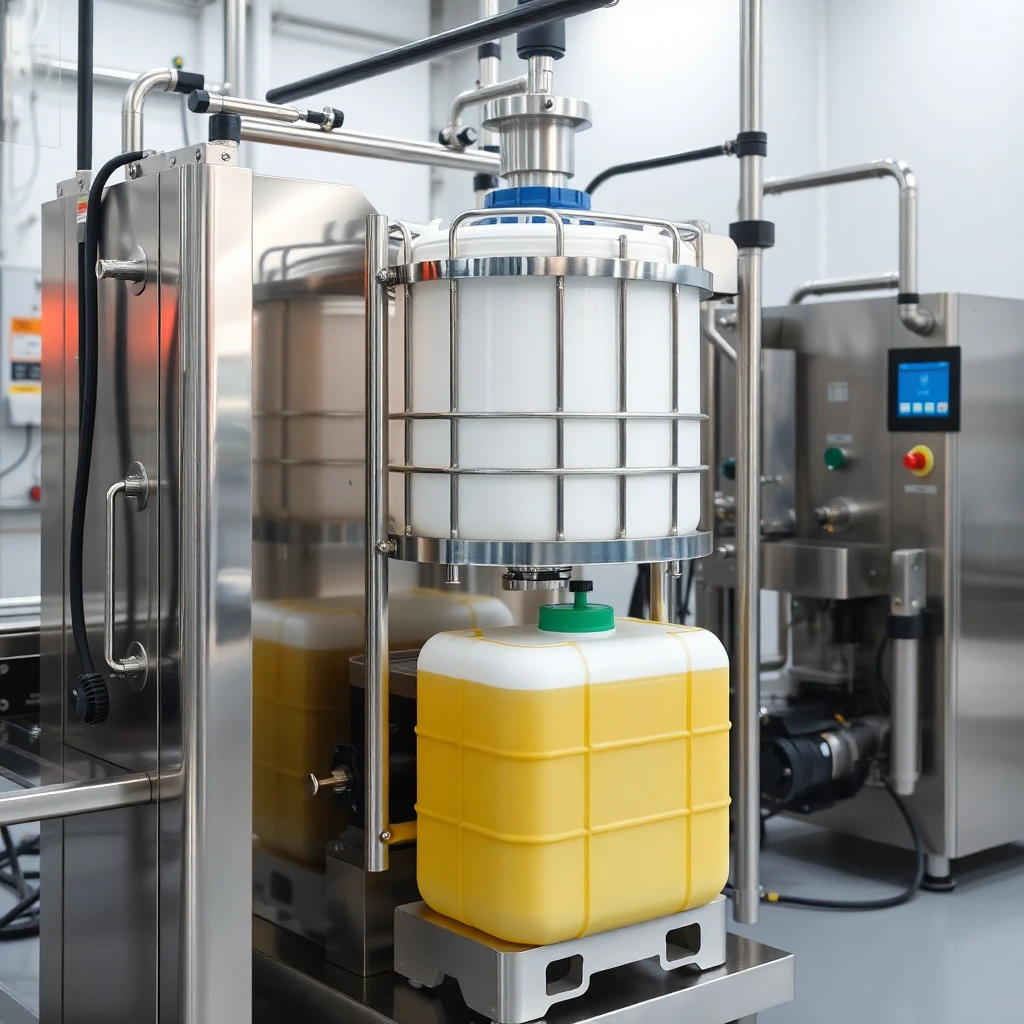
IBC RFQ Guide
IBC Filling Machine RFQ Guide
A quotation checklist for 1000 L IBC tote filling stations and bulk liquid packaging projects.
Short Answer
An IBC filling machine RFQ should include tote size, fill weight, product hazard, viscosity, target output, weighing requirement and plant handling method. IBC filling is a bulk station project, not a small container filler.
What this buyer search usually means
This search usually comes from industrial plants filling lubricants, chemicals, coatings or bulk liquids into 1000 L totes. The buyer needs safe bulk transfer, weighing and handling review.
- Use this page when the project is about ibc filling machine rather than a generic filling machine request.
- Confirm the product, container, closure and output target before comparing machine price.
- Route uncertain projects to engineering review instead of forcing a fixed model too early.
Configuration points to compare
Review weigh platform, top-fill lance, tote access, drip control, grounding, pump connection, forklift movement and batch record needs. For hazardous products, site classification should be discussed early.
- Dosing method and filling head count should follow the product behavior and target speed.
- Container handling, cap or closure method and conveyor layout often change the real scope.
- Cleaning, changeover, documentation and spare-part needs should be included in the early RFQ.
Useful parameter range for first review
HEMUfill source records support IBC filling ranges from 200 L to 1000 L, accuracy around +/-0.2%, and 10 to 40 totes per hour depending on product and station configuration.
- Use ranges for early planning; final values depend on the chosen model and technical agreement.
- If a parameter is uncertain, ask HEMUfill to confirm it during quotation instead of publishing it as a fixed promise.
Common mistake to avoid
The common mistake is specifying only 1000 L IBC without describing the pallet, tote access, product hazard or plant movement.
- Do not judge only from the machine name; the same keyword can hide different containers and automation levels.
- Do not compare quotations until the supply boundary is clear: filling only, complete line, spare parts, documents and commissioning support.
Selection Points
RFQ Checklist
| 1 | Product type, viscosity, hazard status and fill temperature. |
| 2 | IBC size, opening type, pallet dimensions and target fill weight. |
| 3 | Target totes per hour and available pump or transfer system. |
| 4 | Weighing accuracy and batch-record requirement. |
| 5 | Safety, grounding, ventilation and spill-control requirements. |
Common Buyer Questions
Can one IBC station also fill drums?
Sometimes with a combined bulk station, but the layout and filling lance must be reviewed for both container types.
Is IBC filling usually automatic?
It can be semi-automatic or automatic. The right level depends on tote volume, operator exposure, records and plant workflow.
What is the most important IBC RFQ detail?
Product hazard and handling method are critical because they affect safety, grounding, access and station layout.
Related Products
Related Guides
Need a clearer filling machine quotation?
Send the product name, container details, output target and required modules. HEMUfill will route the inquiry to the right filling machine configuration.
Send RFQ Details