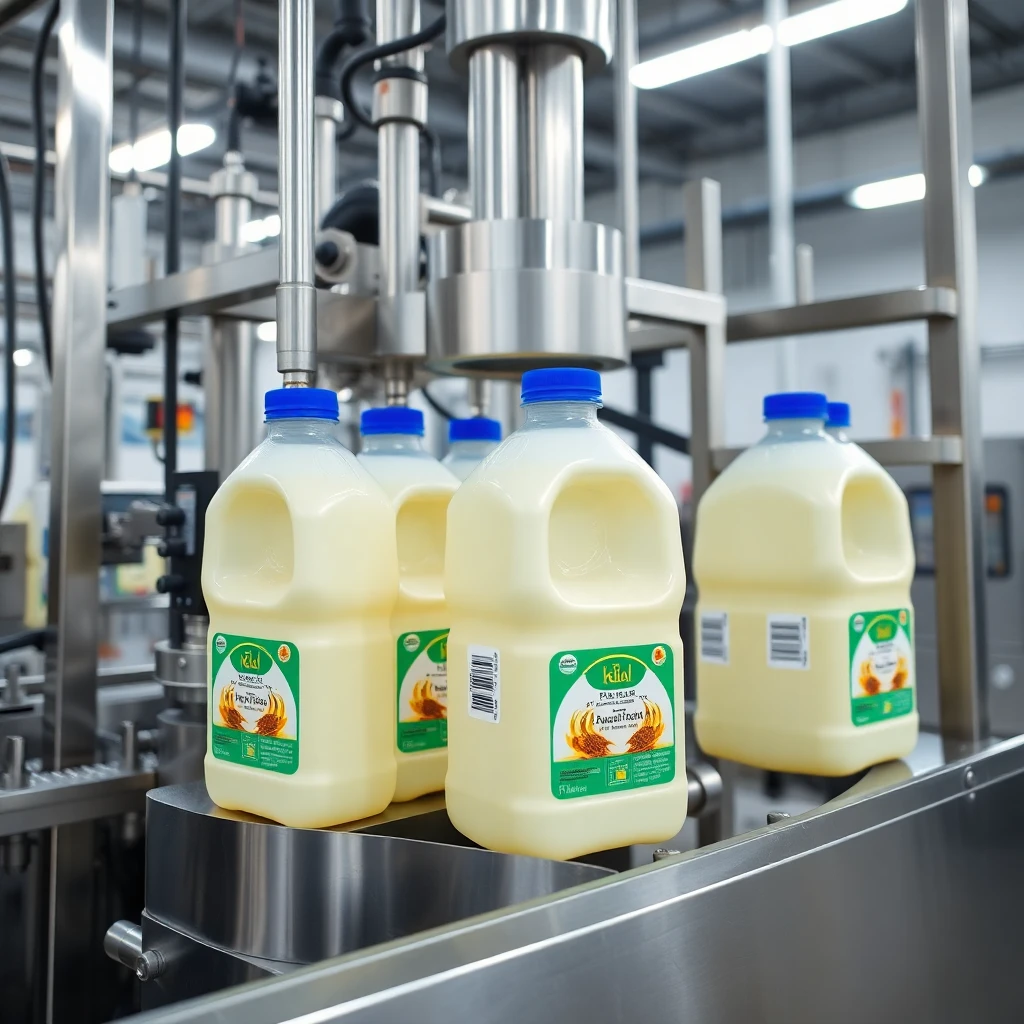
Edible Oil Automation
Semi-Automatic vs Automatic Edible Oil Filling Machine
A practical automation-level guide for cooking oil, vegetable oil and olive oil filling projects.
Short Answer
Semi-automatic edible oil filling can fit lower output and operator-assisted production. Automatic edible oil filling is stronger when bottle flow, capping, labeling and stable output are the real bottlenecks.
What this comparison usually means
This search usually comes from producers moving from manual filling or a small filler toward a scalable bottle line. The decision depends on output, labor, bottle formats and whether capping or labeling must be automated.
- Use the comparison to route the buyer to the right product family before discussing price.
- Confirm product behavior, container format, closure and target output before a model is selected.
- Treat broad terms as an RFQ starting point, not as a finished technical specification.
Configuration differences to verify
Semi-automatic systems usually rely on manual bottle placement or operator support. Automatic systems add conveyors, sensors, multi-head filling, cap handling, labeling and more stable line control.
- Dosing principle, filling head count and automation level should follow the product and container.
- Closure handling, conveyor layout, weighing, dust control or safety modules often change the real scope.
- If the project covers several SKUs, confirm changeover and cleaning before comparing suppliers.
Planning range for first review
Source records support edible oil bottle filling around 100 ml to 5 L. Automatic bottle lines should be reviewed by bottle size, head count, dosing method and downstream modules before speed is promised.
- Use these ranges for first screening only; final values depend on the confirmed model and technical agreement.
- Avoid publishing unverified price or competitor benchmark data in the buyer-facing RFQ conversation.
Common RFQ risk to avoid
The common mistake is buying automatic filling while leaving capping and labeling manual. The line then remains limited by downstream labor.
- Do not ask for a machine name alone; include product, container, closure and target output.
- Do not compare quotations until the supply boundary is clear: filling only, complete line, documents, spare parts and commissioning support.
Selection Points
RFQ Checklist
| 1 | Current output, target output and working hours per shift. |
| 2 | Bottle sizes, cap type, oil type and label requirements. |
| 3 | Labor count available for loading, capping and packing. |
| 4 | Required accuracy and food-contact material expectation. |
| 5 | Phase-one budget boundary and future upgrade goal. |
Common Buyer Questions
When should I choose automatic edible oil filling?
Choose automatic when stable output and reduced manual handling are more important than the lowest starting investment.
Can semi-automatic edible oil filling be upgraded later?
Some systems can be upgraded, but the upgrade path should be discussed before purchase so filling heads, controls and layout do not block expansion.
Is automatic filling always faster?
Only if the full line is balanced. Slow capping, labeling or bottle loading can limit output even with a fast filler.
Related Products
Related Guides
Need a clearer filling machine quotation?
Send the product name, container details, output target and required modules. HEMUfill will route the inquiry to the right filling machine configuration.
Send RFQ Details