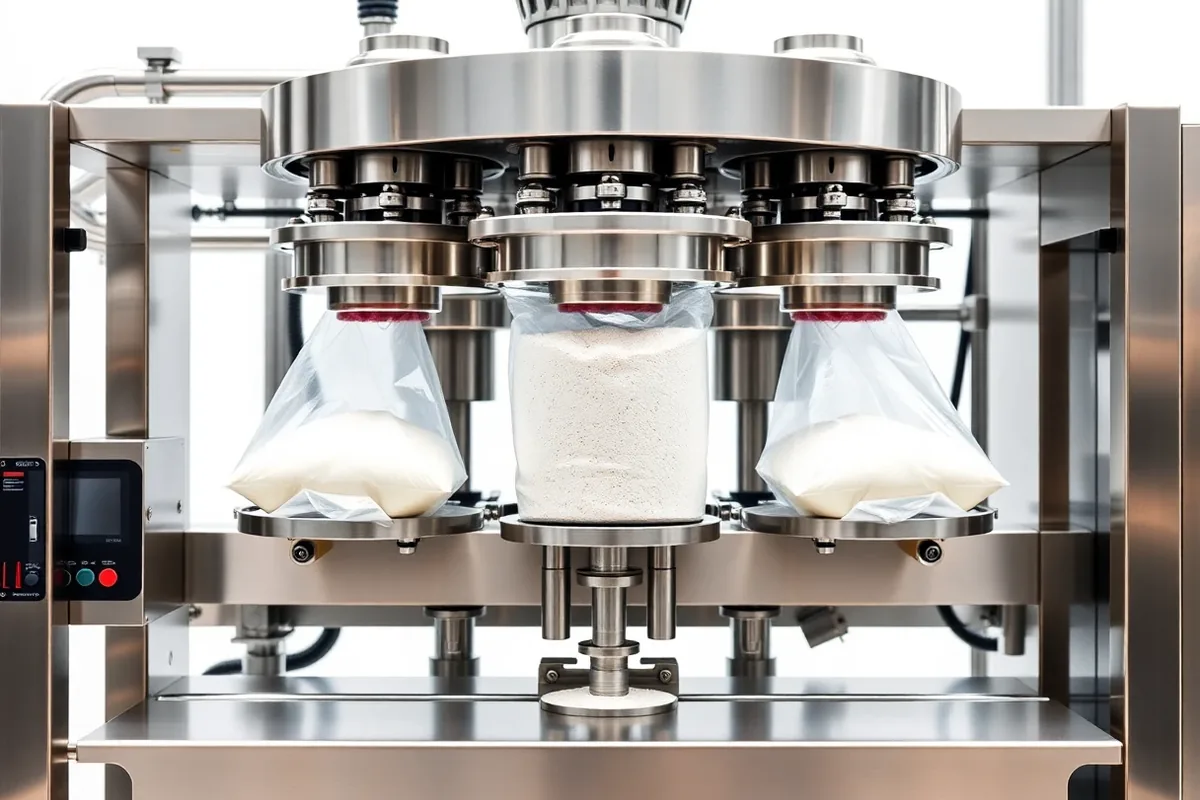
Powder Automation
Automatic vs Semi-Automatic Powder Filling Machine
A powder automation guide for food, chemical, nutraceutical and industrial powder packaging projects.
Short Answer
Semi-automatic powder filling fits low output, manual container placement and frequent small batches. Automatic powder filling is stronger when container flow, weighing, sealing, capping and dust control need a connected line.
What this comparison usually means
This search usually comes from teams moving from manual weighing to controlled production. The decision depends on output target, labor, powder behavior and package format.
- Use the comparison to route the buyer to the right product family before discussing price.
- Confirm product behavior, container format, closure and target output before a model is selected.
- Treat broad terms as an RFQ starting point, not as a finished technical specification.
Configuration differences to verify
Semi-automatic machines often use operator placement and foot or button triggers. Automatic machines can add bottle or bag feeding, auger or weighing, capping or sealing, dust collection and downstream conveyors.
- Dosing principle, filling head count and automation level should follow the product and container.
- Closure handling, conveyor layout, weighing, dust control or safety modules often change the real scope.
- If the project covers several SKUs, confirm changeover and cleaning before comparing suppliers.
Planning range for first review
Source records support semi-automatic powder filling around 10 g to 5000 g and automatic powder filling ranges that can extend by model and package format. Output should be reviewed by weight and powder flow.
- Use these ranges for first screening only; final values depend on the confirmed model and technical agreement.
- Avoid publishing unverified price or competitor benchmark data in the buyer-facing RFQ conversation.
Common RFQ risk to avoid
The common mistake is choosing automatic filling before confirming powder flow. Poor-flowing powder can still slow a fully automatic line.
- Do not ask for a machine name alone; include product, container, closure and target output.
- Do not compare quotations until the supply boundary is clear: filling only, complete line, documents, spare parts and commissioning support.
Selection Points
RFQ Checklist
| 1 | Powder type, flow behavior, bulk density and dust level. |
| 2 | Fill weight range and required accuracy. |
| 3 | Package type and closure method. |
| 4 | Target output and labor available per shift. |
| 5 | Cleaning, contact material and dust control expectations. |
Common Buyer Questions
When should a powder line become automatic?
When manual placement, weighing, sealing or capping becomes the bottleneck and the product has stable enough behavior for connected automation.
Can a semi-automatic powder filler be upgraded later?
Some configurations can be integrated later, but the upgrade path should be discussed before purchase.
Does automatic powder filling improve accuracy?
It can improve repeatability when paired with suitable dosing and weighing feedback, but powder behavior still matters.
Related Products
Related Guides
Need a clearer filling machine quotation?
Send the product name, container details, output target and required modules. HEMUfill will route the inquiry to the right filling machine configuration.
Send RFQ Details